

AI Overviews are summarised AI answers in Google search; AI Mode supports deeper exploration and follow-up questions. Companies should examine which offer information enters answers, which sources appear and what interested buyers find on the website.
I start with the service you want to sell. If its page does not explain suitability, inclusions and the next step, I would fix that first. A citation leading to an unclear offer leaves buyers too much work.
What is the difference for website owners?
| Question | AI Overviews | AI Mode |
|---|---|---|
| How do users research? | An AI overview alongside search results | A separate mode supporting further conversation |
| Which content matters commercially? | A clear answer and verifiable source for a specific concern | Explanations, comparisons and terms for a complex decision |
| What do I check? | Whether the overview appeared and which pages it cites | How sources and answers change with follow-up questions |
Google explains that both experiences can use multiple related searches to build answers, and answers and links may differ. Overviews do not appear for every query. One screenshot is therefore not an overall company-visibility assessment.
Before checking, I record language, market, device, date and feature-access conditions. Availability and appearance change, so comparisons need enough context to interpret differences.
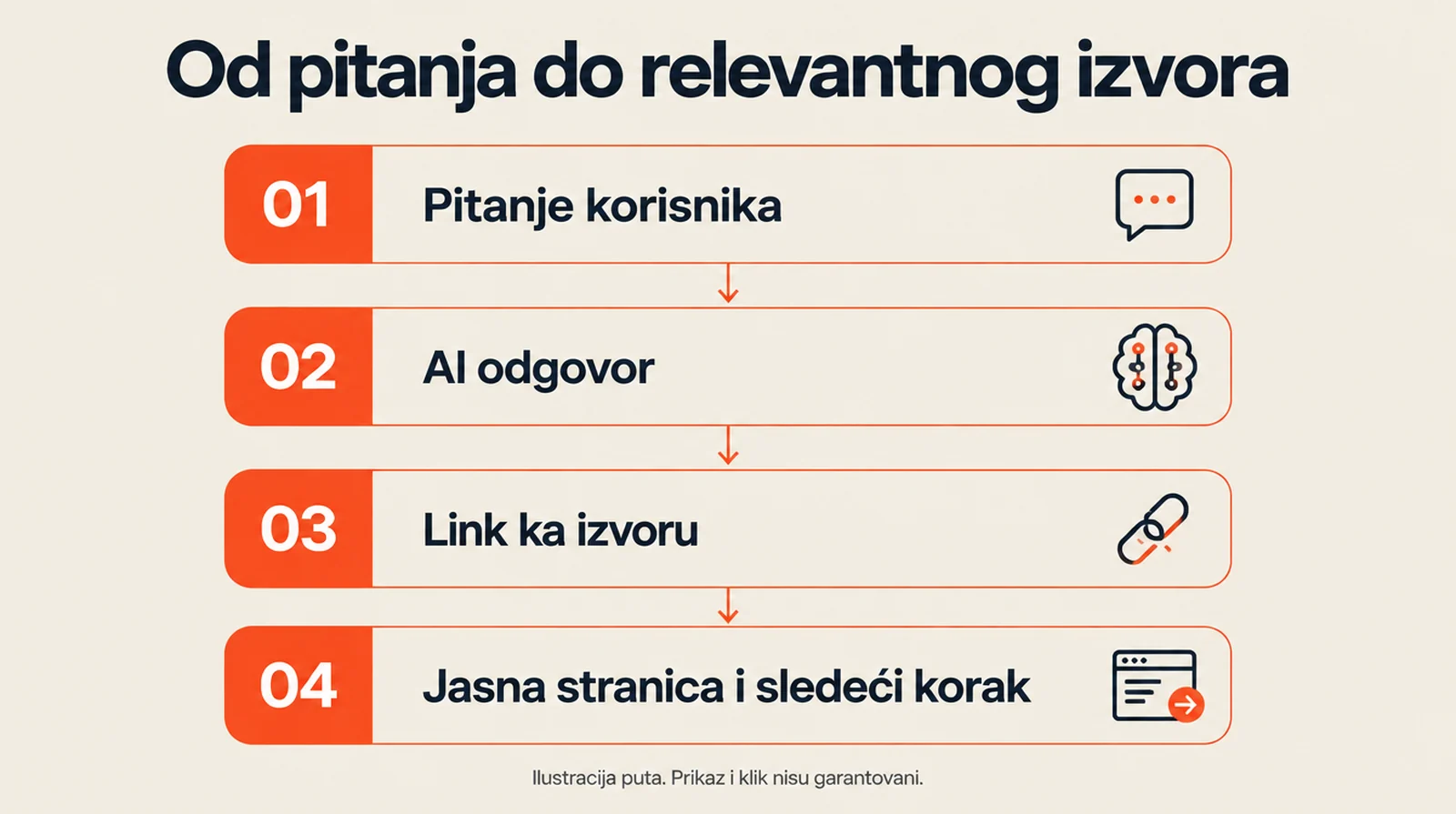
Text description of the graphic
- User question
- AI answer
- Source link
- Clear page and next step
- An illustrative journey. Appearance and clicks are not guaranteed.
What makes a page eligible for Google AI answers?
According to Google Search Central, a page must be indexed and eligible for snippets. No additional AI file or special schema is mandatory. Normal SEO fundamentals apply, and eligibility does not guarantee display.
I turn this into verifiable questions: can crawlers access the page, does canonical identify the right URL, does visible text contain the answer, do relevant internal links lead there and does outdated information distort the offer?
I would check foundations and specific content gaps before buying a plugin promising automatic citations. See when llms.txt makes sense for supporting files.
What controls access and snippets?
Googlebot matters for content entering Google Search. Google-Extended controls certain other AI uses; Google's crawler documentation says it does not control inclusion or ranking in Google Search. Technical findings should identify the exact rule and system.
Snippet controls affect presentation. nosnippet prevents text snippets and direct content use in AI Overviews and AI Mode. data-nosnippet excludes a marked section; max-snippet limits length. These controls affect ordinary results too.
I would test one important page and document what the company wants to allow, rather than changing the whole domain for one-section experiments. Confidential content needs proper access protection; snippet directives do not make public pages private.
How do I choose commercially useful questions?
Start with what sales explains before a proposal. Who compares suppliers? What delays decisions? Which terms rule out unsuitable buyers? These questions connect to business even without large keyword-tool volumes.
Imagine a business-software implementer. “What is ERP?” attracts a broad audience. Questions about migration, store integration and support responsibility are closer to a purchase. This illustrates content planning, not a client's results.
For each question, record a target page and missing information. Combine questions belonging to one decision into a complete guide rather than creating URLs for tiny wording variations.
What would I change in the content?
First write a short answer that works independently, followed by terms, explanation and an example. Readers should know whom advice applies to and when it no longer holds.
Then improve four information types:
- Service: what we do, for whom and what clients receive.
- Selection criteria: when the approach fits or needs another scope.
- Evidence: verifiable data and real examples we have permission to use.
- Next step: a conversation, scope assessment or relevant service page.
I use tables when they aid comparison, FAQs for real concerns and graphics with text explanations. This is an editorial approach to clarity, not a claim that formats automatically earn citations.
For AEO, I care that answers are understandable. For GEO, I examine brand representation and sources in generated answers. See the SEO, AEO and GEO guide.
How do I assess results without exaggeration?
Build a small question set for the main service. Save dates, answers, sources, mentions and key-information accuracy. Repeat within the same framework, recording platform changes.
Record whether the brand is merely mentioned, linked or actually recommended. If AI links a blog but recommends another supplier, I would not report a won recommendation.
Google includes these AI features in Search Console Web reporting, so total clicks cannot automatically isolate AI Overview visits. Track available visits, contacts and outcomes with attribution limits. More in how I measure AEO and GEO.
What is a reasonable first step?
Choose one service and five important buyer concerns. Review existing pages, save initial AI findings and agree on a small change set. After publication, repeat checks and examine offer clarity and contact quality.
Develop this scope through an AI visibility audit. In a GEO engagement, each finding should support a decision: which information to fix, which page to expand and what to check next.
Frequently asked questions
Does every company need a new blog because of AI Mode?
Review existing pages first. A good answer may already exist but be imprecise or poorly linked. A new article makes sense for a distinct unanswered concern.
Do strong organic rankings guarantee AI citations?
No. Display and source selection depend on the system and query. Track organic visibility and documented AI findings separately, then look for useful connections.
What if citations increase but enquiries do not?
Check question intent, destination pages and the offer. The audience may be informational or the next step unclear. More citations alone do not establish sales success.